
Why move beyond paper certificates?
Paper gets lost, fades, and is hard to verify. A digital certificate on the blockchain is permanent, portable, and provably authentic.
Think of a painting: the certificate of authenticity might be taped to the back. It proves provenance, but it’s fragile, easy to misplace, and hard for others to verify without seeing it in person.
A digital ownership certificate is different: it’s stored on a public ledger and can be verified from anywhere. No middleman required.
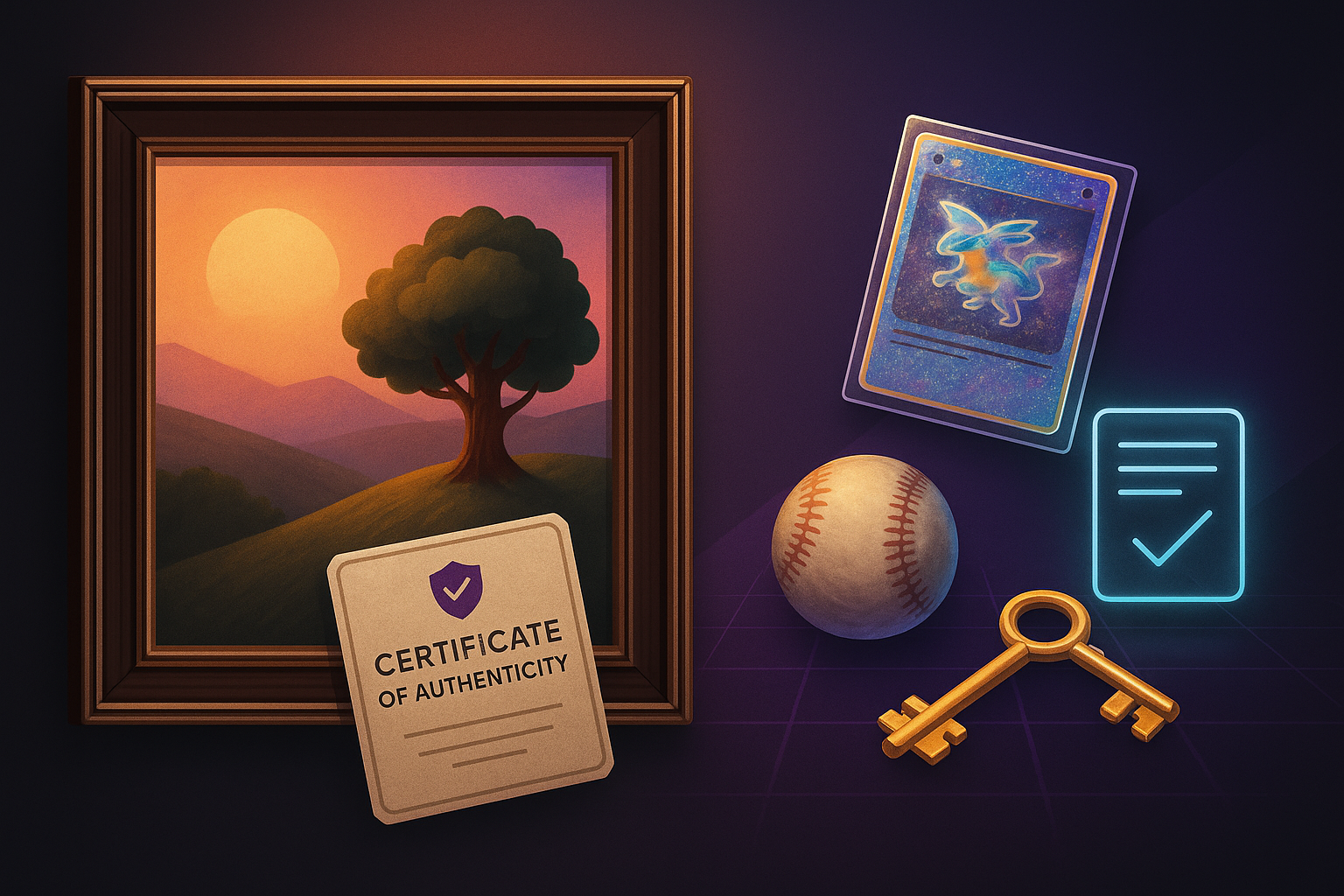
A paper COA proves the start of a story. A digital certificate captures the entire journey.
What exactly is a Digital Ownership Certificate?
It’s a unique, non-fungible record that links a specific asset to a verifiable identity and history.
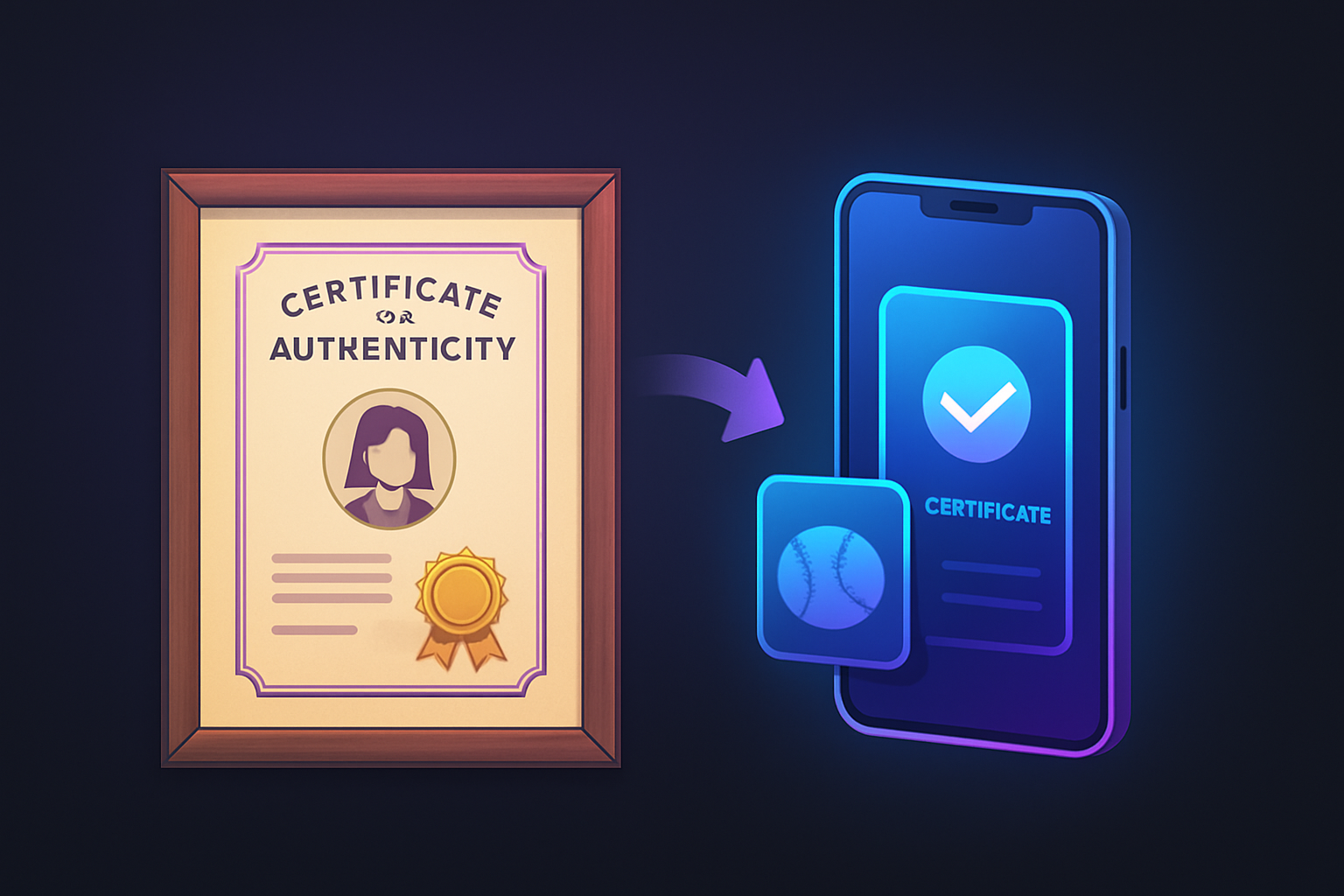
Just like a car has a title and a home has a deed, your collectible gets a digital certificate. It references the item, records its creator or issuer, and can include rich metadata (grade, edition, materials, photos, and more).
Crucially, it’s tamper-evident: if anything changes, there’s a transparent history of what, when, and by whom.
Think of your certificate as a digital passport—stamping every transfer, appraisal, or restoration over the years.
How others handle digital proof
Vault storage, marketplaces, and highlight reels all paved the way—but CertifIQ goes further.
PSA Vaulted and Courtyard.io focus on storing your collectibles in secured vaults. While this enables digital trading, it means your item is locked away—you never actually hold or enjoy it.
Platforms like NBA Top Shot and OpenSea are purely digital. They’ve unlocked value in highlights and art, but again—there’s no physical, tangible counterpart.
CertifIQ’s digital ownership certificates merge the best of both: you keep your collectible in hand, while its on-chain record provides proof, history, and trust. This model can scale beyond trading cards—into fine art, luxury goods, and even auction houses.
How does it work day-to-day?
Minted to your wallet, your certificate is portable and updatable. Each event becomes part of a permanent timeline.
- Certificate is created (minted) and sent to your wallet.
- Item changes hands? The transfer is recorded on-chain.
- New appraisal or grading? Attach data and images as metadata.
- Insurance or provenance checks? Share a verifiable link.
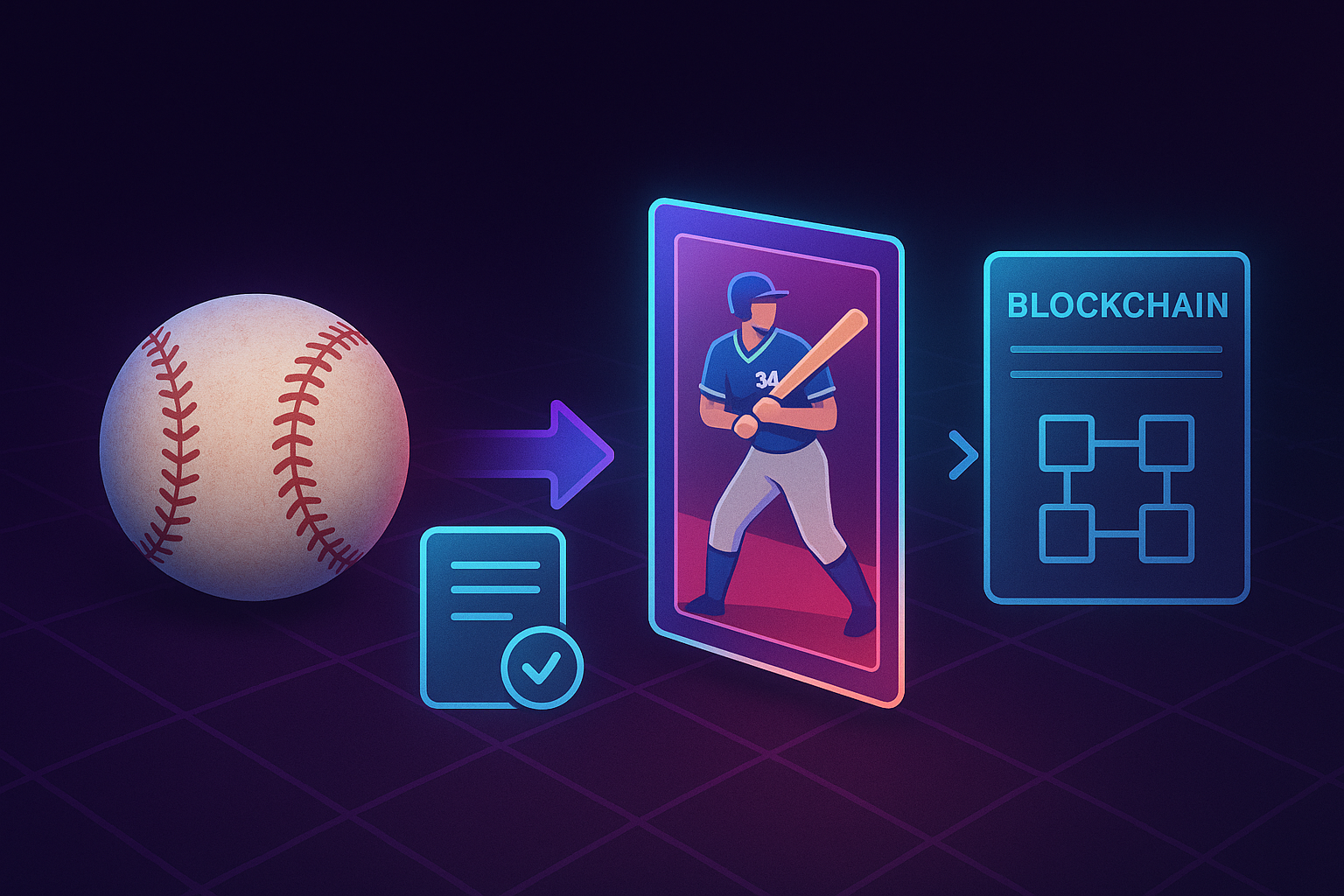
These NFTs are not a gimmick. It’s a durable proof of authenticity, provenance, and care—useful for collectors, insurers, and buyers.
Why Digital Certificates matter

Authenticity
Each certificate is unique and tamper-evident, anchored on a public ledger.

Living Record
Capture updates, ownership changes, appraisals, and restoration notes.

Portable
Accessible from your wallet—verify from anywhere, on any device.
Rich Details
Attach photos, grades, documents, and unlockable content beyond paper.
Trust
Third parties can verify instantly—no emails, PDFs, or phone calls.
Ready to bring your collectibles into the digital age?
Issue a CertifIQ digital ownership certificate, store it in your wallet, and keep a verified history that travels with your item forever.